

Businesses with peak and off-peak demand do not face the same financial pressure throughout the year. Revenue may rise sharply during one period while rent, salaries, inventory costs, and supplier commitments continue even when sales slow. seasonal business challenges therefore require more than simply increasing sales during the busiest months.
Businesses need to plan the entire operating cycle how much cash to reserve, when inventory should be purchased, which employees are critical to retain, and how the next peak period will be financed. cash flow forecasting using previous sales and expense patterns can help owners prepare before a quieter period begins rather than reacting after liquidity becomes tight.
What Are the Main Seasonal Business Challenges?
Four pressure points usually need the most attention:
- Uneven cash flow: Revenue can fall while fixed operating expenses continue.
- Inventory pressure: Buying too early can lock up capital, while buying too late can mean missed demand.
- Staff retention: Experienced employees may be difficult to retain when activity slows.
- Supplier timing: Payments for pre-season purchases may fall due before customer collections arrive.
The aim should be to prepare for these changes as part of the annual business cycle rather than treating every slow period as an unexpected problem.
Learn how businesses can improve cash flow during seasonal periods by exploring our guide on Benefits and Process of Export Bill Discounting.
How Can a Seasonal Business Plan for Growth?
A useful strategy is to connect every stage of the season with a financial decision.
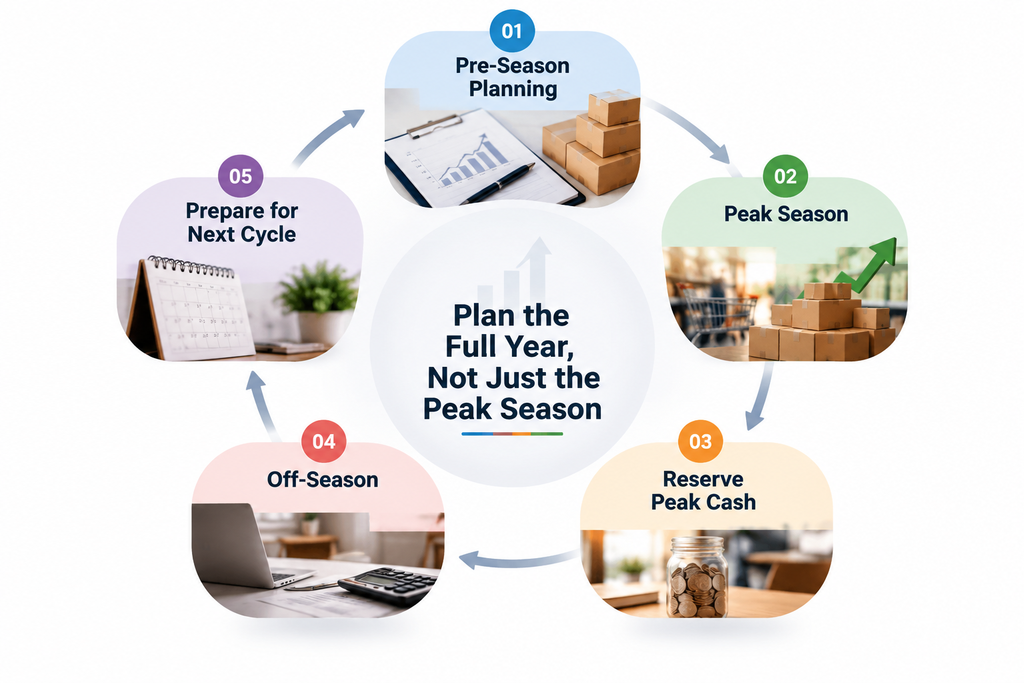
During stronger months, businesses can create reserves for fixed expenses and upcoming purchases. Working capital planning can also help management estimate how much liquidity will be required before demand rises again.
For a broader understanding of how seasonal changes can affect cash flow, working capital, supply chains, and business performance, read this guide on How Seasonal Factors Can Impact Your Business.
Quieter periods can then be used productively for:
- staff training and maintenance
- negotiating supplier schedules
- testing complementary products or customer segments
- preparing inventory and operations for the next peak.
Where Can Financing Support the Seasonal Cycle?
Operational planning should come first. Financing becomes useful when a clearly identified timing gap remains.
For example, invoice discounting may help eligible businesses access cash tied up in unpaid B2B invoices, while supply chain finances in India can support buyer-supplier payment cycles. Growmax also provides working-capital and trade-credit solutions for SMEs and MSMEs.
For practical ways to manage cash flow, control expenses, and support sustainable growth, explore our guide on Working Capital Strategies for Growing MSME Businesses.
Plan the Season Before the Cash Gap Appears
The best way to handle seasonal business challenges is to connect sales forecasting, inventory decisions, supplier commitments, staffing, and finance into one annual plan. Finance should support that plan not replace it.
Growmax Fintech helps eligible businesses explore receivables-based and working-capital solutions suited to their operating requirements.