

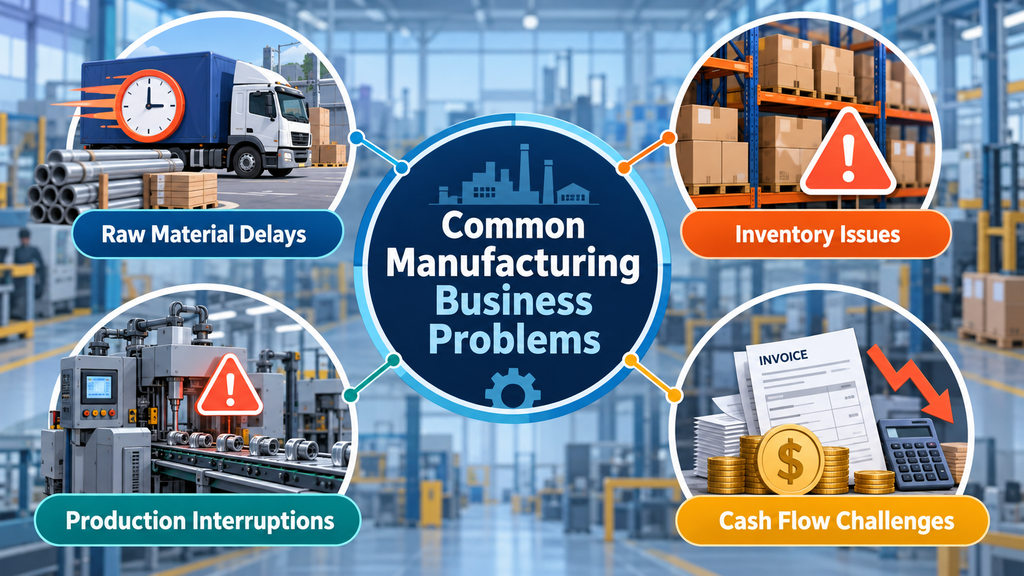
Where common manufacturing business problems usually come from four connected areas: unreliable material supply, poor inventory control, production interruptions, and cash-flow timing. The solution is not simply to increase production capacity. Manufacturers need to identify the exact bottleneck, strengthen supplier planning, control stock against real demand, reduce avoidable downtime, and monitor when cash enters and leaves the operating cycle.
Smaller manufacturers can be particularly exposed to supply delays, limited visibility, capacity constraints, and changing material requirements. A regular review of demand, suppliers, production capacity, inventory, and collections can therefore prevent one problem from disrupting the entire production cycle.
To understand how suitable financing options can support manufacturing operations and international trade, read our guide on Trade Finance Solutions for SMEs in India: Smarter Ways to Fund Growth
What are the most common manufacturing business problems?
- Raw-material delays → Maintain alternative suppliers, monitor lead times, and define reorder triggers.
- Excess or insufficient stock → Connect purchasing with sales forecasts and production schedules.
- Machine downtime → Schedule preventive maintenance for equipment that can interrupt the production line.
- Slow customer collections → Track receivables by due date and plan liquidity before payroll, supplier, or production expenses arise.
For manufacturers executing confirmed export orders, pre shipment finance may support eligible procurement, production, and order-related requirements before dispatch. Growmax lists pre-shipment support for eligible international-trade requirements.
How can manufacturers improve the production cycle?
Each stage should have an owner, expected timeline, and simple performance measure. Addressing common manufacturing business problems becomes easier when management can identify exactly where a delay begins rather than reacting only after output or delivery falls.
Supplier strength also matters. Reviewing supplier capacity, quality, delivery reliability, and backup options can reduce dependence on a single weak link.
Where payment timing affects buyers and vendors, supply chain finance may support eligible transactions and help maintain smoother trade operations. Finance should address a defined timing gap rather than hide an inefficient process.
When money remains tied up in eligible B2B receivables, invoice discounting in India can provide earlier access to invoice value, subject to verification and financing terms.
For additional insights into overcoming production inefficiencies, inventory challenges, and operational difficulties, explore OptiProERP’s guide on Solving Small-Scale Manufacturing Problems
Manufacturing health check
Export-oriented manufacturers can also explore export finance in India when liquidity requirements are linked to eligible international transactions. Growmax Fintech supports manufacturers with finance for production, raw materials, operational expenses, invoices, supply chains, and export activity.
Fix the production bottleneck first. Then use the appropriate financial route to keep materials, production, and cash moving.
For a broader approach to managing inventory, receivables, production costs, and day-to-day liquidity, explore our guide on Working Capital Strategies for Growing MSME Businesses.