

Running a business requires more than generating sales – it demands consistent cash flow. Many businesses earn healthy profits but still struggle to cover everyday expenses because cash isn’t available when it’s needed. That’s where Working Capital in Financial Management makes the difference.
If your business shows any of these seven signs, it’s time to review your working capital strategy.
Signs of Weak Working Capital Management
Working capital problems rarely appear overnight. Recognising these early warning signs can help you take corrective action before cash flow issues become more serious.
1. Your Sales Are Good, but Your Cash Is Running Out
High revenue with little cash on hand usually points to poor liquidity rather than poor sales. As a result, you may struggle to pay your daily business expenses even when your revenue looks healthy.
2. Customers Take Longer to Pay Their Invoices
Late payments from customers can quickly affect your Business cash flow. When customers don’t pay on time, you may delay supplier payments or depend on loans to cover everyday expenses.
Setting clear payment terms and following up regularly can improve your cash flow.
Beyond affecting daily cash flow, delayed customer payments can also create additional financial strain. Explore the hidden costs of late payments for Indian MSMEs to understand their long-term impact.
3. Inventory Is Growing Faster Than Sales
Inventory should generate revenue – not lock away your capital. If stock levels continue increasing while sales remain flat, cash is sitting on warehouse shelves instead of supporting business operations.
Monitoring inventory turnover helps improve liquidity and reduce carrying costs.

4. Frequent Borrowing Can Hurt Your Working Capital in Financial Management
Using Working capital finance to manage seasonal demand is normal. However, depending on short-term loans every month to pay salaries, rent, or suppliers suggests a structural cash flow problem rather than a temporary one.
5. Suppliers Are Chasing You for Payments
If you regularly pay suppliers late, your business may not have enough cash to cover its daily expenses. Late payments can weaken supplier relationships, reduce your bargaining power, and even interrupt your supply of goods.
6. Your Current Assets Can’t Cover Your Current Liabilities
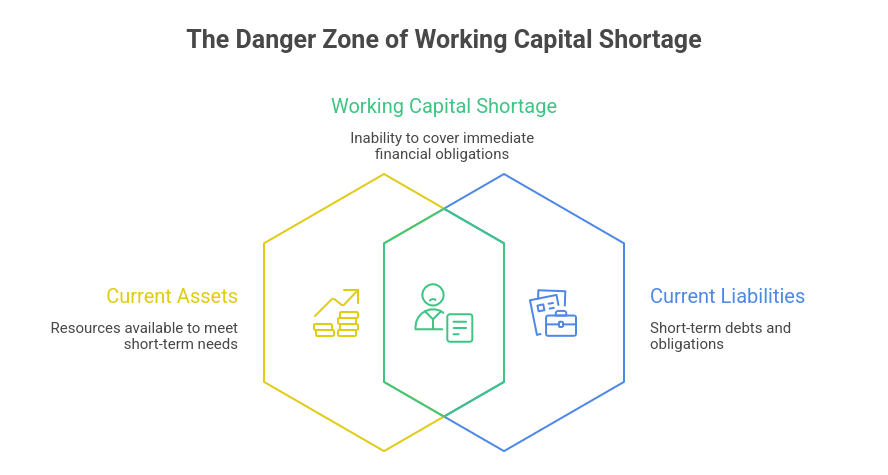
Compare your Current assets and current liabilities regularly. If your cash, inventory, and receivables cannot cover your short-term debts, your business may face cash shortages.
Maintaining a healthy balance helps you meet financial obligations on time. Studies on working capital efficiency and financial resilience among Indian MSMEs show that businesses with efficient liquidity management are better equipped to handle financial challenges.
7. Growth Is Creating More Financial Pressure
Business growth often brings higher expenses, such as buying more inventory, hiring employees, or expanding operations. Without proper Financial Management, these costs can create cash shortages even when sales continue to grow.
If your business shows any of these seven signs, it’s time to review your working capital strategy. Understanding the different MSME working capital solutions available in India can help you identify the right approach to improve liquidity and keep your business running smoothly.
Ready to Strengthen Your Working Capital?
Strong Working Capital in Financial Management helps your business run smoothly. If you notice any of these warning signs, don’t wait until they affect your operations. Review your cash flow, keep a close eye on your Current assets and current liabilities, and take action early.
At Growmax Fintech, we help businesses improve cash flow through invoice discounting. Instead of waiting weeks or months for customer payments, you can unlock funds from your unpaid invoices and access working capital faster.
Contact Growmax Fintech today to Speak with our experts today and keep your business moving forward.
Also Read: From Startup to Scale: How MSME Loans for Startups Fuel Business Growth