

An overseas sale can be profitable and still create a cash-flow gap when the customer pays weeks after shipment. Export bill discounting helps eligible businesses access value tied to a trade receivable before the agreed payment date, subject to documentation, buyer assessment, and financing terms.
In practice, the benefit is not simply receiving money sooner. It is about keeping the operating cycle moving while a completed sale is still awaiting collection. The released capital can support raw-material purchases, freight, payroll, supplier commitments, or the next confirmed order. For growing SMEs, this creates a closer match between sales activity and the cash needed to continue operations.
For startups looking to secure funding and scale sustainably, explore our guide on From Startup to Scale: How MSME Loans for Startups Fuel Business Growth to understand available financing options and growth opportunities.
What Benefits Can This Financing Route Offer?
Earlier access to trade receivables can help an exporter:
- Maintain working capital while customer payment terms continue.
- Meet supplier and operating expenses without waiting for overseas collections.
- Prepare for upcoming orders with greater cash-flow visibility.
- Reduce pressure created by long settlement cycles.
Export Bill Discounting Move From Shipment to Settlement
The process is better understood through four checkpoints rather than as simply “submit an invoice and get paid”:
- Receivable creation: Goods are shipped, an invoice is raised, and required trade records are prepared.
- Transaction review: The financing provider checks supporting documents, payment terms, and the profile of the overseas buyer.
- Financing decision: If the receivable meets eligibility requirements, the provider determines the approved amount, applicable charges, and conditions.
- Settlement: Finance is released before the original due date, and the transaction is settled according to the agreed structure when payment is received.
For additional information on bill discounting and trade finance services, explore the detailed resources provided by Bank of Baroda
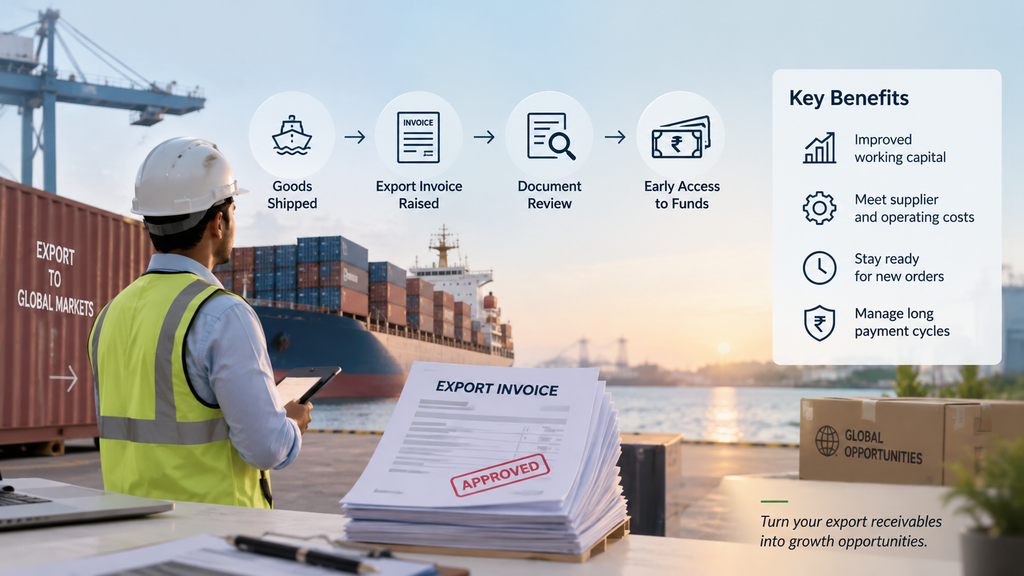
This makes post shipment finance particularly relevant when the cash requirement arises after goods have already left the seller.
Explore our guide on Trade Finance Solutions for SMEs in India: Smarter Ways to Fund Growth to understand how trade finance can support working capital and business expansion.
When Does Export Bill Discounting Add the Most Value?
It can be useful when customer payment terms extend beyond the company’s operating cycle, new orders arrive before earlier invoices are collected, or recurring overseas sales create regular receivable gaps.
Businesses should compare documentation requirements, pricing, currency exposure, buyer risk, recourse terms, and settlement conditions before choosing a provider.
Growmax Fintech supports SMEs and MSMEs with LC and non-LC invoice financing, trade finance, working-capital solutions, and support for businesses involved in international trade.
The right structure should match the transaction and cash-flow timing not simply provide the largest available amount.
FAQs
Is this suitable for every overseas invoice?
No. Eligibility depends on transaction documents, buyer profile, payment terms, and provider assessment.
Does early financing change the buyer’s original payment date?
Not necessarily. Settlement depends on the agreed transaction structure and provider terms.