
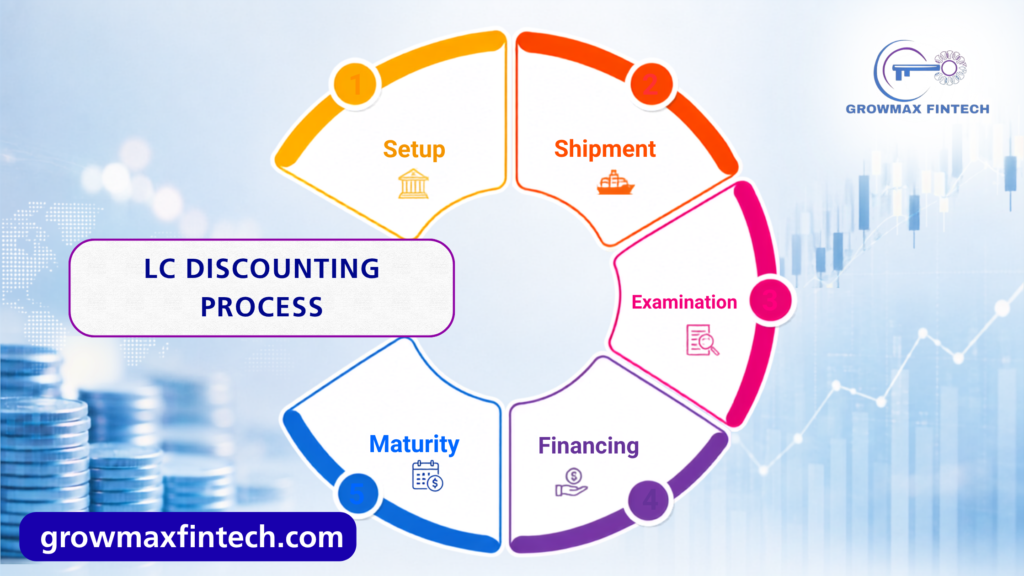
In an LC-backed trade transaction, the importer and exporter have different responsibilities. The importer arranges the banking commitment and follows the agreed payment timeline, while the exporter ships the goods, presents the required documents, and may seek access to the receivable before maturity.
The LC discounting process connects these activities by creating a financing opportunity against an eligible future payment. Understanding who does what at each stage is important because shipment, document examination, early funding, and final settlement do not all happen at the same time.
What Happens Before Funding Is Considered?
Before any early financing takes place, the transaction usually moves through several important stages:
- Trade terms are agreed: The buyer and seller finalise commercial and payment conditions.
- The importer arranges the bank undertaking: The issuing bank creates it in favour of the seller.
- The exporter reviews the conditions: Dates, required records, and shipment requirements should be checked carefully.
- Goods are dispatched: Shipment takes place according to the agreed terms.
- Documents are presented: The seller submits the required commercial and transport records through the banking channel.
At this point, documentary compliance becomes important because banks examine the submitted records against the stated conditions.
Also Read : Smarter Ways to Fund Growth in the guide of Trade Finance Solutions for SMEs in India
How Does the LC Discounting Process Differ for Each Party?
| Stage | Importer | Exporter |
| Setup | Arranges the bank undertaking | Reviews the stated terms |
| Shipment | Awaits goods and documents | Ships and prepares records |
| Examination | Follows agreed conditions | Handles discrepancies, if any |
| Financing | Keeps the payment timeline | May finance export receivables |
| Maturity | Settlement occurs as agreed | Financing closes as applicable |
Early Funding Enter the Transaction
When payment is due at a future maturity date, the seller may prefer not to wait. After the eligible obligation has been established, the exporter can approach a financing provider.
The provider may then:
- Review the transaction and submitted documentation.
- Assess eligibility and applicable financing terms.
- Calculate relevant charges.
- Advance an approved amount before maturity.
This is where trade finance helps bridge the timing gap between a future payment and the seller’s current working-capital requirement.
To learn more about LC bill discounting, its features, eligibility, and how exporters can access funds after shipment, explore this detailed guide from Kotak Mahindra Bank.
“Early funding for the seller does not automatically mean the importer must pay earlier”
What Happens at Maturity?
At maturity, settlement takes place according to the original banking arrangement. The financing transaction is then closed as applicable.
This separation between early access to funds and final payment at maturity is the key to understanding how the LC discounting process works differently for importers and exporters.
Growmax Fintech supports SMEs and MSMEs with financing solutions for trade transactions, receivables, and working-capital requirements, subject to eligibility and documentation.
Need support with trade-related funding? Connect with Growmax Fintech at +91 90255 45525.
One Response