
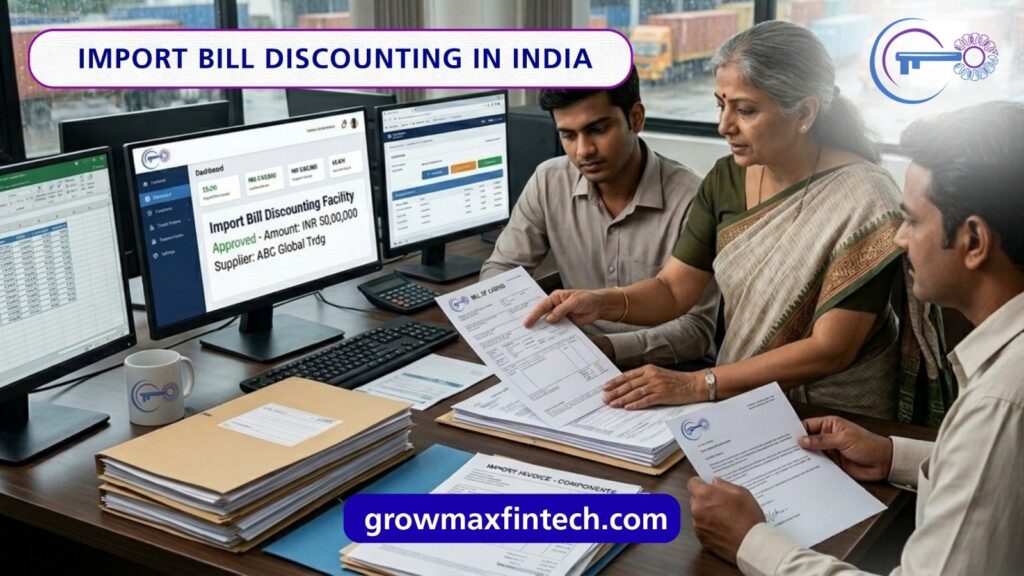
Indian importers often need to pay overseas suppliers quickly, even when their own cash inflows are still weeks away. In this gap, import bill discounting in India can act like a bridge, helping businesses clear supplier dues on time while repaying the bank or financier later from sales. Instead of delaying shipments or stretching supplier relationships, importers can convert trade bills into short‑term funding that keeps the supply chain moving. This is especially useful for SMEs who rely on regular raw material imports, components, or finished goods to meet customer demand.
What Is Import Bill Discounting?
Under import bill discounting in India, a bank or financier pays your overseas supplier against import bills, and you repay the bank later with interest and charges.
In simple terms:
- The supplier ships goods and raises an invoice.
- Bills and shipping documents reach your bank.
- The bank discounts the bill, pays the supplier, and gives you a credit period.
- You repay the bank on or before the due date.
This import bill discounting process lets you receive goods and keep your supplier happy, even if your current cash position is tight.
Step‑by‑Step Import Bill Discounting Process
Understanding the import bill discounting process makes it easier to plan cash flow.
Typical steps are:
- Supplier ships goods and issues the commercial invoice and transport documents.
- Documents move through banks (often under LC or collection terms) and reach your bank in India.
- You request the bank or financier to discount the import bill.
- The bank checks the buyer, supplier, and documents, then pays the supplier or their bank.
- You receive a defined credit period to repay the discounted amount plus interest and fees.
When used with discipline, import bill discounting in India can reduce shipment delays and avoid penalties or loss of supplier trust.
Key Documents Required for Import Bill Discounting
Banks and financiers need clear proof of the trade transaction. The documents required for import bill discounting generally include:
- Commercial invoice and packing list
- Bill of lading or airway bill
- Insurance policy, if applicable
- Letter of credit or purchase contract terms
- Bill of exchange or draft
- KYC and basic financials of the importer
Having these documents required for import bill discounting ready and accurate speeds up approval and reduces the chance of discrepancies or delays.
How Costs Are Calculated
Costs under import bill discounting in India come from a few components:
- Discounting interest for the credit period (for example, 30–90 days)
- Processing or arrangement fees charged by the bank or platform
- Any foreign currency conversion or SWIFT charges, where applicable
To estimate total cost, importers should:
- Compare rates across banks and fintech platforms.
- Check if rates differ for LC‑backed bills versus open‑account imports.
- Look at the full effective cost, not just the headline interest rate.
A clear view of cost helps you decide when the import bill discounting process is better than using cash credit, overdrafts, or other working capital lines.
Use Import Bill Discounting Smartly with Growmax
Used correctly, import bill discounting in India helps businesses clear overseas dues on time, maintain stock, and avoid disruption in production or sales. Instead of struggling with every shipment, importers can turn trade bills into a planned part of their working capital strategy.
Growmax Fintech supports Indian SMEs with trade‑focused funding solutions, including structured options around export and import bill financing. By working with partner banks and digital processes, growmaxfintech.com helps you understand eligibility, documentation, and cost so you can use import bill discounting confidently. If your business regularly imports goods and faces cash flow gaps, exploring tailored solutions with Growmax Fintech can make your next shipment smoother and your supplier relationships stronger.