
Exporters often need cash soon after shipping goods, but buyers may pay much later. In this gap, choosing between bill discounting vs bill negotiation becomes an important decision for working capital. Both are forms of post shipment export finance, but they work in different ways and suit different risk levels. Understanding how each option affects your cash flow, risk, and paperwork helps you select the right tool for each shipment instead of using the same method every time.
Understanding post shipment finance at Growmax Fintech can provide deeper insights into selecting the right funding option based on your business needs.
What Is Bill Discounting in Export Trade?
In export bill discounting, you take your export bill or invoice to a bank or financier and receive most of its value as an advance. The bank collects the payment from the buyer on the due date and adjusts its charges before releasing any balance.
Key points:
- Quick access to funds against accepted bills
- Simpler process and fewer document checks
- Useful when you trust the buyer and want speed
This is a flexible form of post shipment export finance because it turns your export receivables into cash without waiting for the full credit period.
What Is Bill Negotiation Under a Letter of Credit?
Bill negotiation happens when you ship under a letter of credit (LC) and present documents to the negotiating bank for payment. The bank checks if your documents match LC terms, and if they are in order, it pays you and later claims the amount from the buyer’s bank.
Key features:
- Stronger payment security thanks to the LC
- Detailed document scrutiny and strict compliance
- Suitable for new buyers or high‑value shipments
Because the bank relies on the LC, this type of post shipment export finance is more secure but can feel more formal and document‑heavy than export bill discounting.
Cash Flow Impact: Bill Discounting vs Bill Negotiation
From a cash‑flow view, bill discounting vs bill negotiation is mainly about speed, certainty, and cost.
- Bill discounting:
- Faster and simpler when buyer risk is low
- Good for repeat shipments to trusted buyers
- Helps you recycle working capital quickly
- Bill negotiation:
- Better protection where buyer or country risk is higher
- Ideal for new customers or large orders under LC
- May involve stricter checks and timelines
Exporters often mix both options—using export bill discounting for regular, low‑risk buyers and bill negotiation under LC for complex or higher‑risk deals. This blended approach keeps post shipment export finance aligned with real‑world risk.
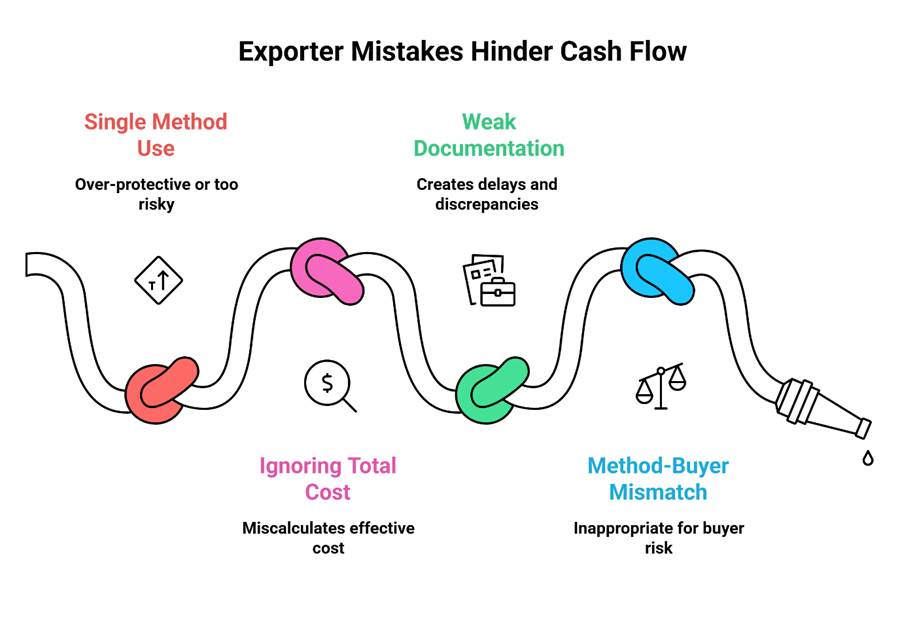
Common Mistakes Exporters Make
- Using only one method for all buyers
Some exporters pick just one route and never review it. For low‑risk, regular buyers, pure LC‑based negotiation may be over‑protective; for new markets, relying only on discounting can be risky. - Ignoring total cost, not just rate
When comparing bill discounting vs bill negotiation, exporters may look at headline interest rate but ignore handling, swift, and discrepancy charges. Always compare effective cost against cash‑flow benefits. - Weak documentation discipline
Incomplete or inconsistent documents create delays and discrepancies. This is especially harmful in bill negotiation under LC, where strict document checks are central. - Not matching method to buyer risk
Trusted buyers with clear payment history are ideal for export bill discounting, while unfamiliar buyers or sensitive markets are often better handled through LC‑based negotiation. Smart foreign bill negotiation strategies for exporters can help businesses make better decisions by aligning methods with buyer risk and trade conditions.
How Growmax Fintech Can Help
Choosing between bill discounting vs bill negotiation does not have to be confusing. A specialist partner can help you map your buyers, risk levels, and cash‑flow needs to the right mix of export bill discounting and other post shipment export finance tools. Growmax Fintech focuses on helping Indian exporters turn their export bills into predictable cash flow through structured, transparent solutions tailored to order values, buyer profiles, and payment terms.
India introduces seven measures to support export growth, further strengthening the ecosystem and creating more opportunities for exporters to benefit from efficient financing solutions.
If you want to unlock faster funds on your export bills while managing risk sensibly, visit growmaxfintech.com to explore how digital export finance options and curated partners can support your next shipment and keep your cash flow strong.